

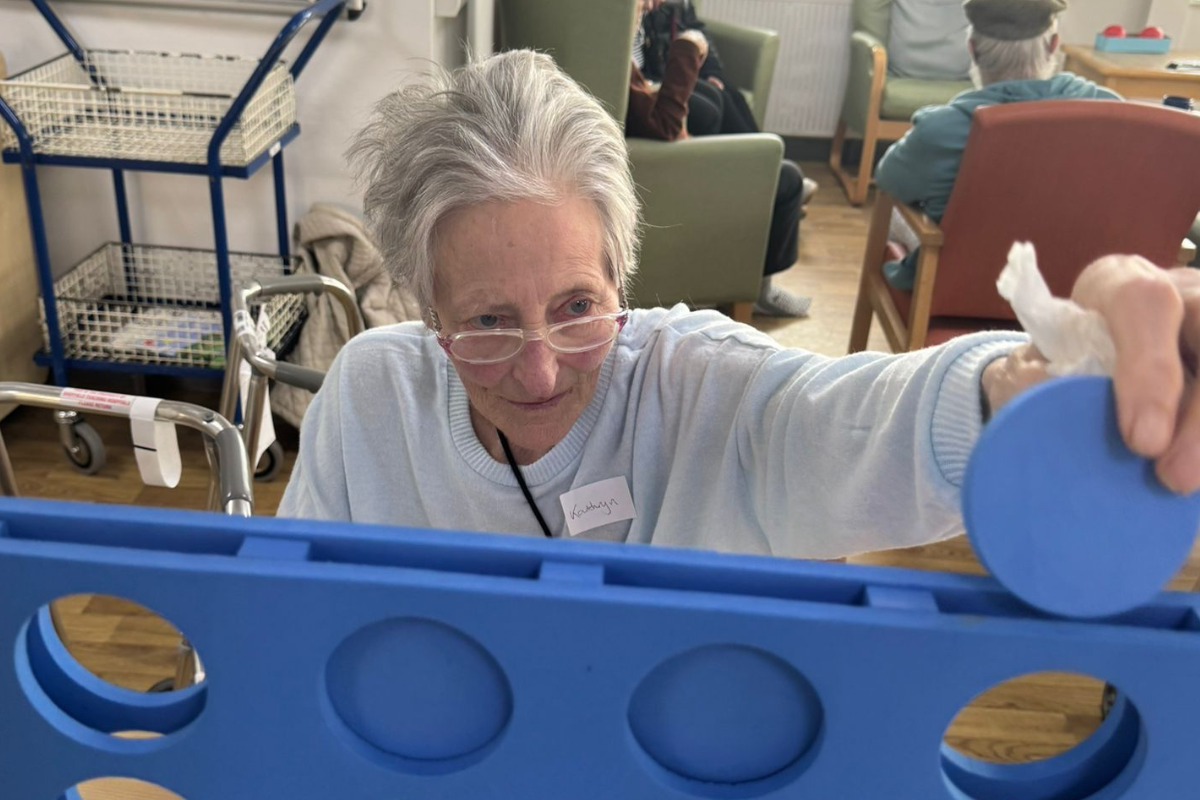
There is music playing in the day room. A game of bingo is underway in one corner, while another table is covered in cards and dominoes. Patients are reminiscing about dances from their youth after recognising a song from decades ago.
To many these moments may seem small. But for patients living with dementia and their relatives visiting across the wards, they can be transformative.
Moments like these are made possible by charity-funded roles like Wendy’s. She is an Activity Coordinator who works across the Northern General and Royal Hallamshire Hospitals.
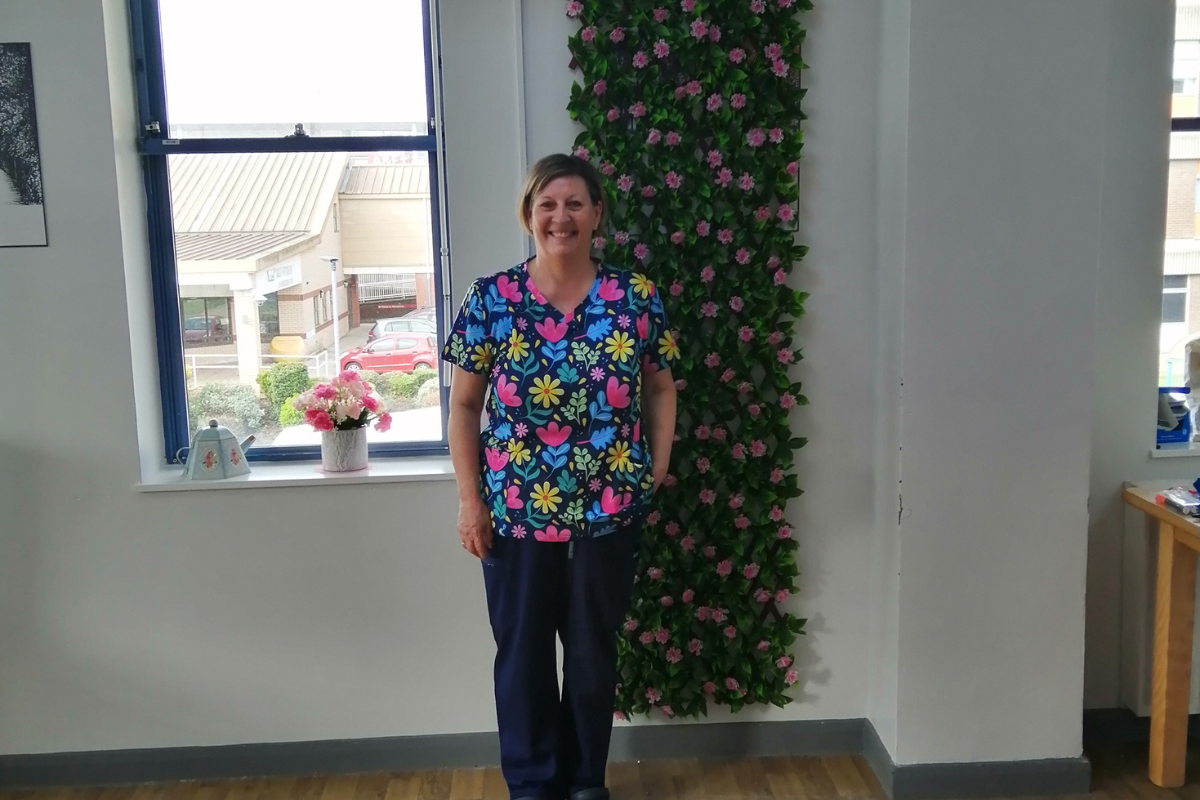
“I see every single day what a difference it makes, to have spaces like the day room to bring patients in and do all kinds of activities. Some patients don’t speak at all on the wards, but when they are there and start playing games or listening to music, they suddenly talk and it catches you off guard!”
Hospital wards can be noisy and overwhelming places. Machines beeping, curtains closed, clinical staff helping their patients. For people who are hard of hearing or confused, conversation can become difficult. Creating quieter, welcoming spaces away from the bedside helps people reconnect.
“We had three ladies recently who had been on the same bay for two weeks but had never said a word to each other. We brought them into the day room for activities, and they started chatting away non-stop. By the end of the session, they said they couldn’t believe they’d been sat together all that time and not spoken. They were so grateful and asked me when the next one would be!”
Activities range from bingo, film screenings and afternoon teas to card-making, games and seasonal events for Valentine’s Day, Mother’s Day and Christmas.
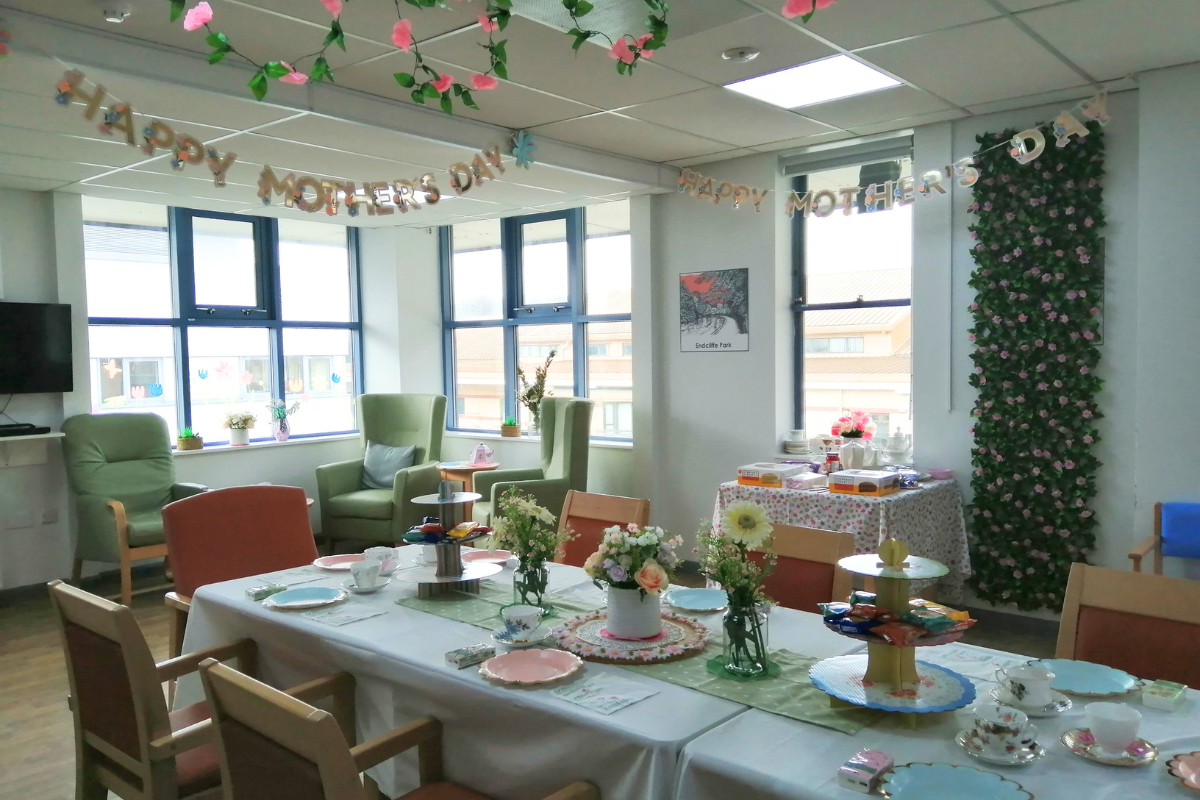
One Christmas activity left staff especially emotional.
A patient’s daughter warned staff not to expect much engagement from her mum, explaining that since her dementia diagnosis she had withdrawn and no longer wanted to take part in activities. Then during a Christmas craft session, patients began painting baubles.
“As soon as she started painting, she started talking about how she used to be an artist. She described some work she’d done for Portrait of the Year. By the end of the afternoon, she had painted two baubles while her daughter stood at the back crying tears of joy.”
The daughter later said: “That’s the most I’ve seen her talk in such a long time.”
Moments like these are reminders that every person living with dementia has their own story and how important dementia care is.
“I’m proud of my role,” Wendy said. “Both of my parents are living with dementia and to see how I can help other families like mine means a lot to me.”
If you’d like to help us fund important projects like our Activity Coordinators, you can donate to our dementia appeal or get your tickets to join the Red Shoe Walk this August.
With your support, together we can have a lasting impact on dementia care in Sheffield.
Published: Monday 18th of May 2026