

At the Osborn 4 Neurorehabilitation Centre, patients are recovering from life-changing brain injuries and conditions. For some, this may be following an accident or assault. For others, it could be a brain haemorrhage, brain tumour, multiple sclerosis or Guillain-Barré syndrome.
Osborn 4 is home to people who often need many months of care and rehabilitation as they work towards getting back to everyday life.
Thanks to our generous supporters, there is now a special place where that rehabilitation can happen beyond the ward.
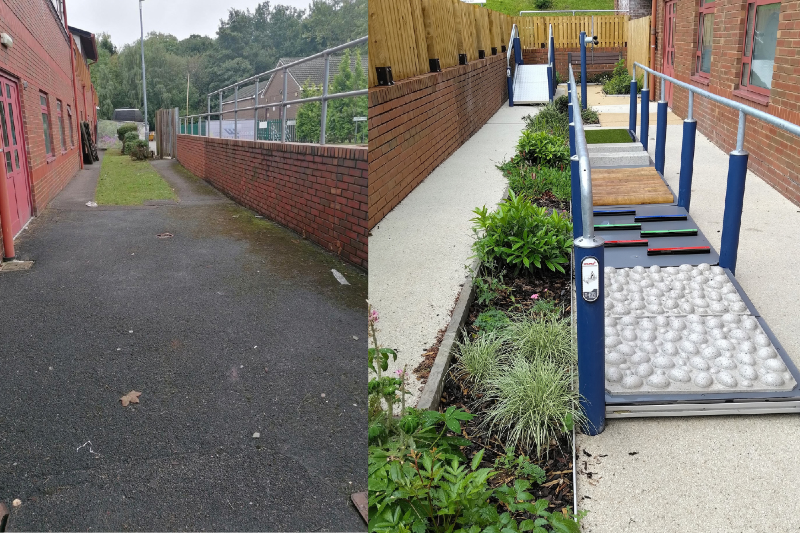
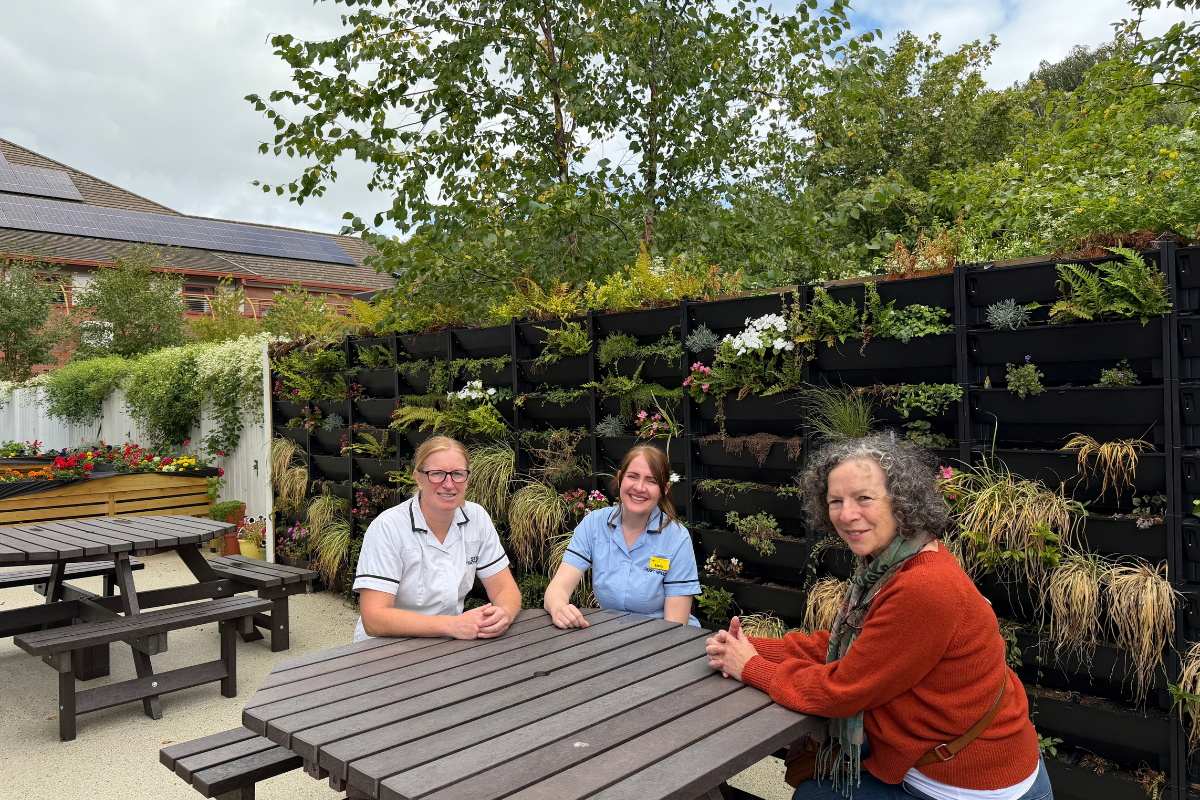
We have funded the creation of a tranquil outdoor rehabilitation garden designed around the needs of patients, giving them somewhere to practice their physical skills, spend time with their families, enjoy gardening or simply sit outside and take a breath.
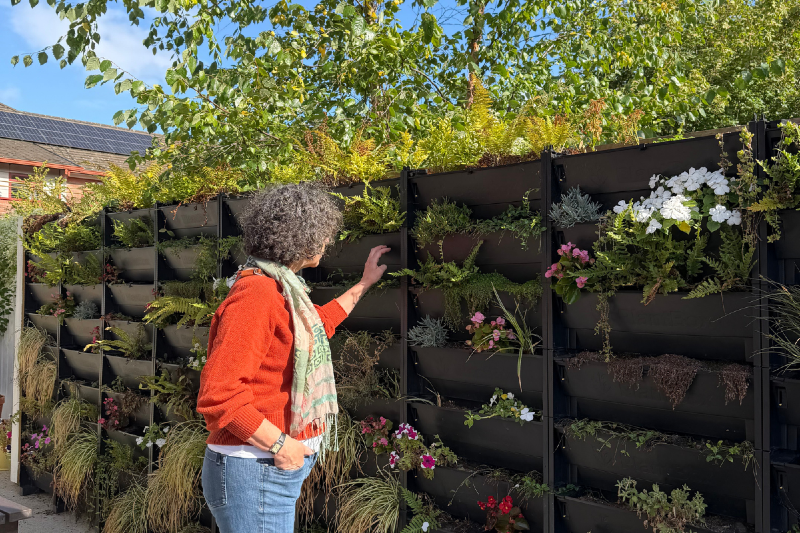
For patients who have been in hospital for a long time or had a life-changing experience, having somewhere to spend time outdoors can make a real difference.
One day after work, Rachel suddenly started typing letters and words that didn’t make sense on her laptop. She put it down to faulty technology until she started messaging her family the next morning and realised her phone was doing the same thing.
“I realised it wasn’t the technology; it was me. I went to A&E, had a CT scan and they told me I had a mass on my brain. At that point I felt like my life fell apart.
“They confirmed it was a brain abscess. I don’t remember anything after that other than the surgeon leaning over me and saying, “you are really very ill. We have to operate now.”
Within 24 hours Rachel went from being a high-level functioning professional to emergency brain surgery.
“When I woke up, I’d lost all my speech, and my arm was completely paralysed. The surgeon warned it might be permanent, but the team at Osborn 4 put all their efforts in to getting it back. They also helped me with the transition from hospital to home as the new me.
“Suddenly the world was a frightening place. I felt vulnerable in every way. I think going out to a garden would’ve been a safe halfway place between the hospital and the real world. To be able to shuffle around, look at things, learn movements and balance again without thinking about it.
“It would have been lovely to just do something normal that wasn’t about learning how to function again. It would’ve been nice to not be a patient in that moment and simply deadhead a rose or weed.”
It can be a long journey to recovery, with patients like Rachel spending months in hospital.
“The real world is full of colours, shapes and noises, so to suddenly go outside, it can feel too much. A garden would’ve been a good transition for that. It would’ve made things much less overwhelming.
“When all that normality has suddenly been taken away from you, to have the normality of a garden would’ve meant the world.”
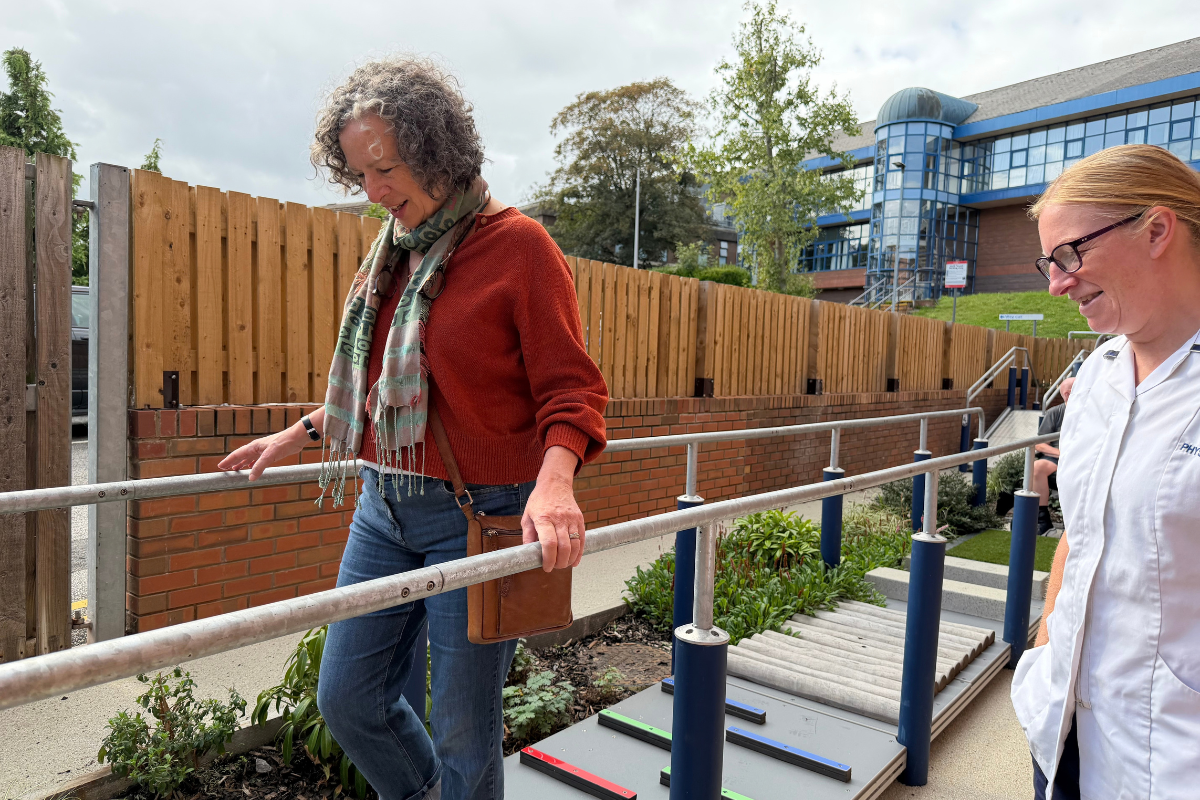
The rehabilitation garden gives patients the opportunity to build confidence and practice the skills they’ll need when they return home. There’s an area to practice outdoor mobility over a variety of uneven surfaces. This helps patients progress from walking along flat hospital corridors, to surfaces they will be faced with in the real world. Something that Rachel wishes she had access to during her stay.
“When I first started my recovery back home, I was walking along the pavement and suddenly there was patchwork on the floor. I looked down and my brain couldn’t understand the difference in surface. All I could say to my partner was ‘scrumples!’ So, training your brain to adapt to different textures and having that safe environment to practice with staff is invaluable. It’s absolutely amazing.”
The garden also gives families the chance to spend time together away from the ward.
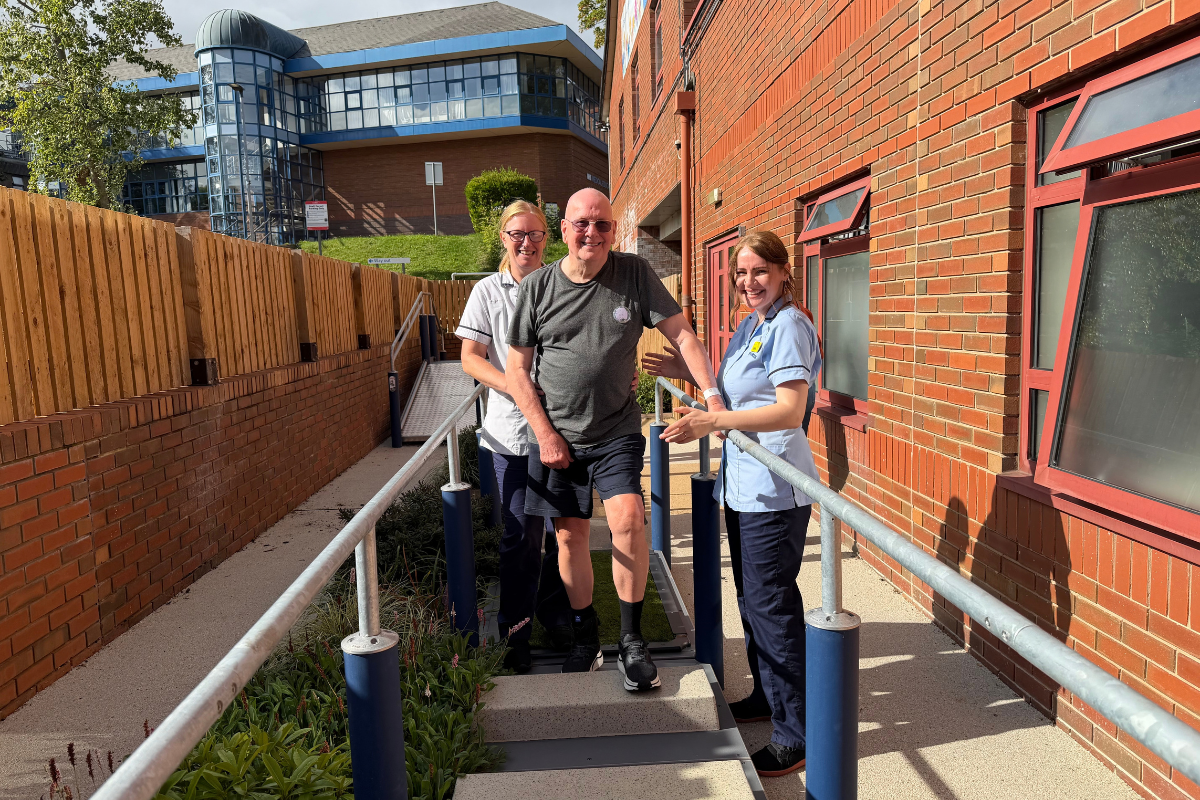
Another patient Vic has benefitted from the new gardens already. He was in hospital for over four months, receiving treatment for rare and serious condition called Guillain-Barré syndrome.
After using the garden and rehabilitation area, he received the news that he could finally go home.
“I’ve come on leaps and bounds and I’m so pleased with the care I’ve received. The garden has been excellent. It’s felt more like a hotel than a hospital out there! These gardens have been brilliant. My son has come to visit, and we’ve had lunch out there every day. I’ve used the equipment to help me walk on different surfaces which was strange at first but it was so helpful. The last surface to practice has cobbles, it’s like being in Whitby!”
Emma Anderson, Clinical Specialist Physiotherapist, said:
“We get a lot of bees, butterflies, birds. One patient’s family put a bird feeder outside; he could see all the birds fly in from his hospital window. Relatives can take time outside while their loved one sleeps or has therapy too. There’s a games table and a specialist physio area, and patients can even have their pets come to visit. It’s just amazing for everyone.”
Emily Swift, Therapy Assistant Practitioner added, “It’s exactly what we wanted. Every inch of space has been maximised and there is so much variation. We wanted the in- between of the hospital and the outside world, and that’s exactly what the charity has funded. It’s fabulous! We’re so, so grateful that we’ve been able to do this. Thank you.”
It’s because of our supporters that we can help create spaces like this, giving patients the chance to heal, recover and reconnect with the people and world around them.
Published: Wednesday 30th of September 2026