

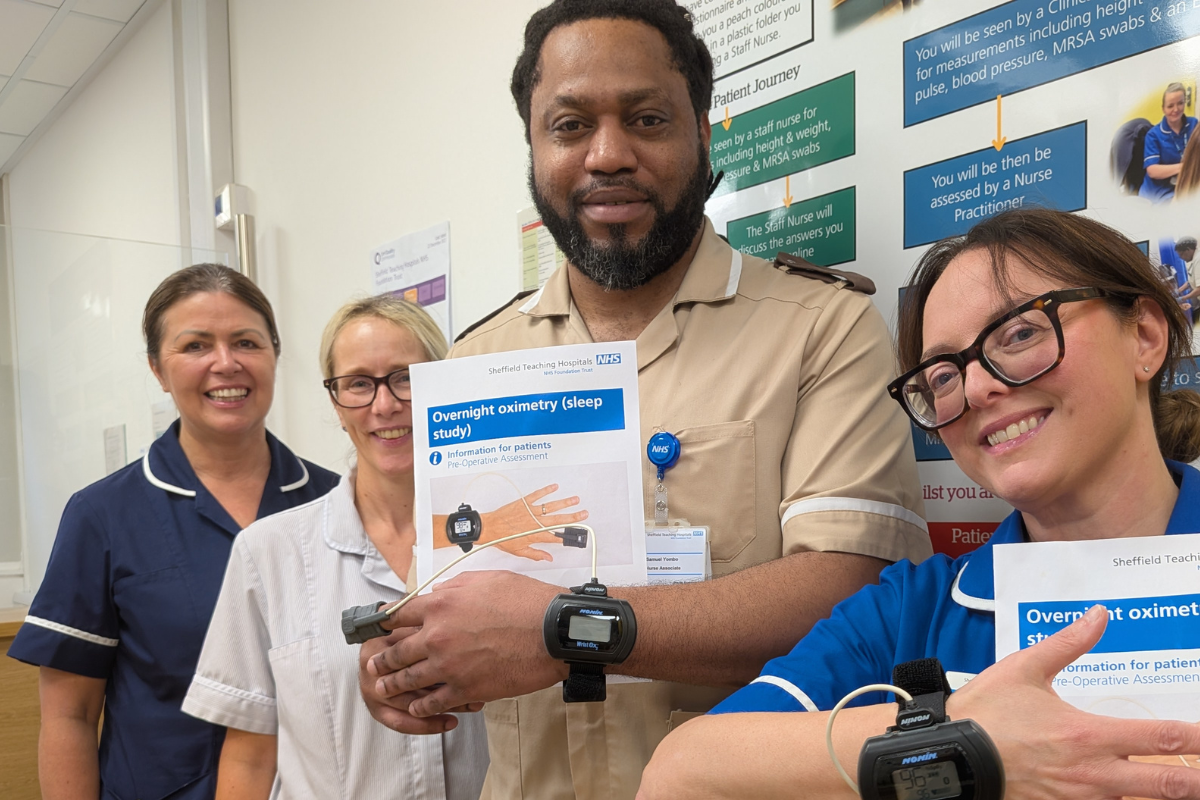
Thanks to our funding of the Sheffield Teaching Hospitals (STH) Dragons' Den innovation programme, a new way of screening patients is helping them have surgery sooner, reducing unnecessary stays in critical care and making better use of NHS resources.
The SNORESAFE project was developed by a team at STH to rapidly identify patients with obstructive sleep apnoea (OSA) before surgery as part of the preassessment pathway. OSA is a common condition where normal breathing interrupts during sleep, often without people realising they have it. Around six million people in the UK are thought to have the condition, but most remain undiagnosed.
For patients having an operation, undiagnosed sleep apnoea can increase the risk of complications following an anaesthetic. Before SNORESAFE, patients considered to be at risk either faced a lengthy wait for specialist testing before surgery or were admitted to critical care after their operation for monitoring, even if they didn't have the condition.
Thanks to a £7,100 Dragons' Den innovation award, the team introduced a simple but highly effective solution. Patients identified as being at risk are given a wrist-worn device to wear overnight at home before their operation. The device monitors oxygen levels and heart rate while they sleep, allowing the team to quickly identify whether sleep apnoea is present.
The impact has been significant. Around 60% of patients tested do not have sleep apnoea, meaning they can safely avoid an unnecessary stay in critical care. Those who do have the condition can be diagnosed quickly, receive the right treatment and still go ahead with surgery without lengthy delays.
The pathway is now saving an average of 12 to 14 critical care bed days each month, has delivered savings of around £130,000 in its first seven months, and is helping more patients have planned operations sooner.
For Sheffield patient Marie Twigg, who was preparing for ankle replacement surgery, the screening offered reassurance that she did not have sleep apnoea and meant she didn't need a stay in critical care after her operation.
She said: "The test was no problem, and when they phoned with the results, they said there was nothing to worry about, which was good to know and gave me some confidence and reassurance. Not having to stay in hospital any longer than necessary was a big positive. I think most people would rather be at home than in a hospital bed."
For David Vaines, from Barnsley, the screening identified previously undiagnosed sleep apnoea before surgery to treat a trapped nerve in his neck. He was able to begin treatment while still going ahead with his operation.
David said: "It is brilliant that it can be tested and diagnosed there and then. You are not sat about waiting and it means you can go ahead with the surgery and get on with your life. It's an amazing service."
Consultant Anaesthetist Dr Kristy Wagstaff, who led the team that developed SNORESAFE and applied for funding, said: “It seemed like a simple idea, but it has had a really big impact. It is better for patients, as they are not having unneeded hospital stays or interventions, and better for the hospital in terms of the most effective use of crucial resources.
“It is also helping to reduce delays for elective surgeries such as hip replacements, gallbladder removal and hernia repairs, as these patients can go ahead with surgery sooner. It provides an all-round better and more efficient patient experience.”
The project was funded through our Dragons' Den innovation programme, which gives Sheffield Teaching Hospitals staff the opportunity to pitch innovative ideas that improve patient care, staff experience and hospital services.
SNORESAFE is another fantastic example of how charitable funding can help NHS colleagues turn innovative ideas into real improvements for patients.
If you want to be a part of our Sheffield Dragons’ network click here
Published: Thursday 30th of July 2026