

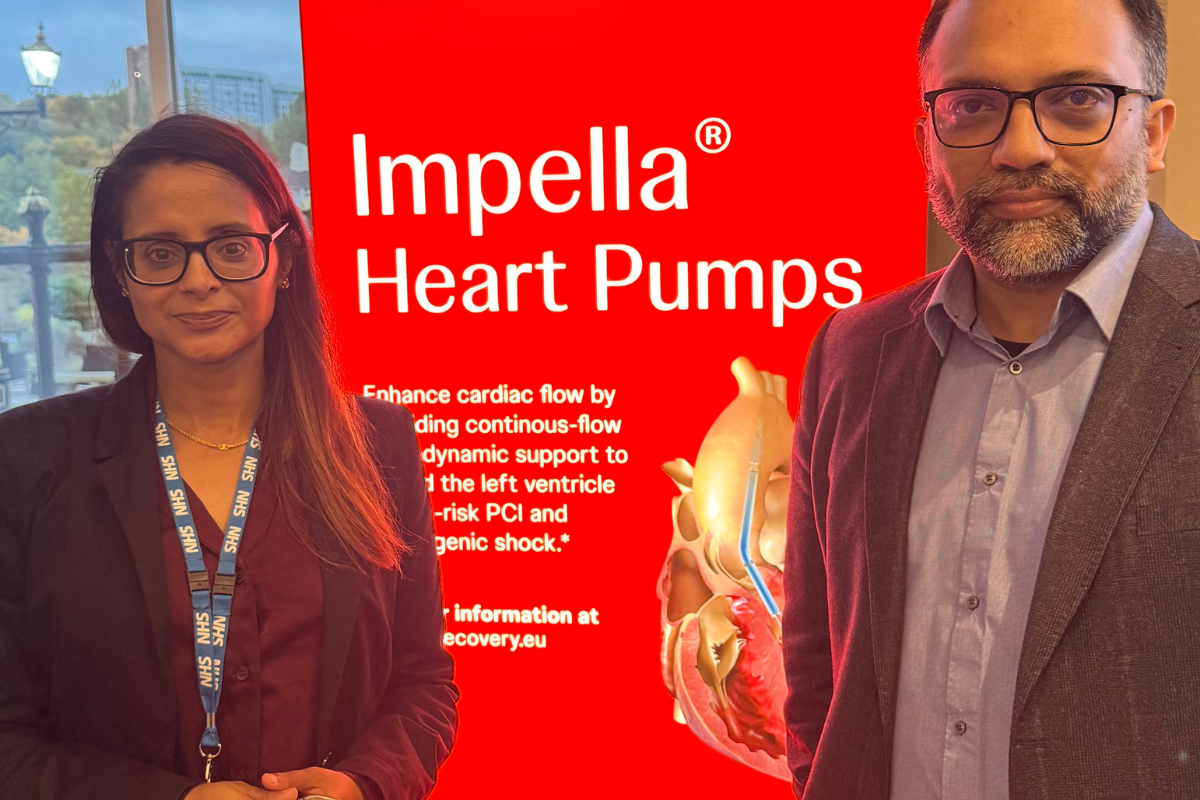
Sheffield Hospitals Charity has provided over £247,000 to buy 15 new life-saving miniature heart pump devices to improve outcomes for the region’s sickest heart patients, including those experiencing cardiogenic shock.
Cardiogenic shock is a life-threatening condition where the heart can’t pump enough blood to meet the body’s demands and can often occur after a severe heart attack.
The new heart pump devices, which are the smallest heart pumps in the world, will be used to treat the sickest and most vulnerable heart patients.
Sheffield Teaching Hospitals NHS Trust, which is home to one of the largest cardiothoracic centres in the UK, will be the first cardiac centre in Yorkshire to start using these revolutionary devices.
The devices, which work by providing short-term mechanical circulatory support to the heart, allow the heart to rest and recover whilst blood and oxygen is being delivered to the entire body when heart pumping function is critically impaired.
As well as aiding heart function during complex procedures to treat severe blockages in the heart’s arteries, the device’s cardiac support system ensures blood supply to the vital organs like the brain, liver and kidneys is maintained. This can be critical in preventing severe organ damage during complex, serious heart procedures. The devices may be used for up to 7-14 days, whilst the heart recovers.
Recent research has shown that the pump’s cardiac support system plays an important role in the treatment of cardiogenic shock, improving survival, recovery and quality of life whilst also shortening the length of time patients would normally have to spend in cardiac intensive care units.
Around one patient a month is set to benefit over the next 12-15 months, including those referred from hospitals in Chesterfield, Doncaster and Barnsley experiencing cardiogenic shock or those in acute cardiac distress such as patients awaiting a heart transplant, those with multiple illnesses and those undergoing high-risk cardiac procedures.
It is important to note that most patients undergoing heart procedures, such as coronary angioplasty or stents will not need one of these devices.
Dr M Aetesam Rahman, Consultant Cardiologist and Impella Project Lead at Sheffield Teaching Hospitals NHS Foundation Trust, said:
“We are delighted to have been awarded this funding from Sheffield Hospitals Charity. Traditionally, around half of patients with cardiogenic shock do not survive beyond the first month due to the serious nature of disease process. However, thanks to this investment, we hope to significantly improve survival rates whilst also reducing the length of time patients need to spend in hospital.
“Here in Sheffield, we are fortunate to have a highly skilled and specialist clinical team who are at the forefront of advancing outcomes and care for heart patients. By introducing this new technology, we are even better equipped to deliver cutting-edge, life-saving treatments, making a real difference for our most seriously ill patients.”
Shasta Ashraf, Director of Grants at Sheffield Hospitals Charity, said:
“Sheffield Hospitals Charity is committed to funding projects that have an immediate, life-saving benefit to patients. We are truly excited to be supporting this project, which will enable our cardiologists to save even more lives and provide vital evidence to the growing body of data showing us that this intervention can make a genuine difference in helping patients. Supporting patient-centred experiences is also one of our four priority areas where we invest to have the greatest impact for the people of Sheffield.”
Published: Tuesday 9th of December 2025